
Osaka vs Tokyo
Japan's kitchen versus the world's largest metropolis — two unmissable cities compared across culture, food, attractions, nightlife, budget, and more
Powered by ITINE
Get this guide as a tappable itinerary
Day-by-day plan, audio tours, and one-tap Google Maps — completely free.
Destinations
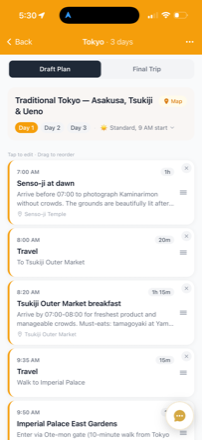
Your Itinerary
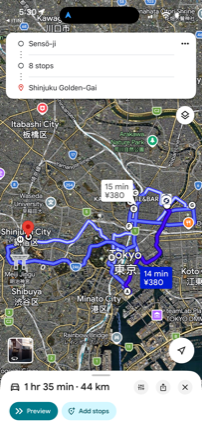
Google Maps
Osaka and Tokyo are Japan's two greatest cities — and they could not be more different in personality. Tokyo is the sprawling, hyper-modern megalopolis with 37 million people, more Michelin stars than any city on earth, and an intensity that never lets up. Osaka is the loud, proud, food-obsessed city where people eat until they drop (kuidaore), laugh louder, and welcome strangers like old friends. Tokyo dazzles with scale and sophistication; Osaka wins with warmth, flavour, and soul. Here is our honest comparison across every category that matters.
Head-to-Head Comparison
Osaka
Osaka is Japan's kitchen and comedy capital — a loud, proud, fun-loving city where people are famously warm, outgoing, and down-to-earth. Known as the "nation's kitchen" (tenka no daidokoro), Osaka has a deeply rooted street food culture and a vibrant, unpretentious energy that sets it apart from every other Japanese city. Osakans are known for their directness, humour, and generosity. The city runs on kuidaore — eating until you drop — and the neon-drenched streets of Dotonbori embody this spirit perfectly. Osaka feels like Tokyo's rebellious, fun-loving sibling.
Tokyo
Tokyo is the world's largest metropolitan area — a staggering 14 million people in the city proper and 37 million in Greater Tokyo. It is the epicentre of Japanese pop culture, technology, fashion, and global business. Each neighbourhood is its own universe: Shibuya's famous crossing and youth culture, Shinjuku's neon towers and nightlife, Asakusa's historic temples, Akihabara's anime paradise, and Harajuku's fashion extremes. Tokyo is meticulously organised, relentlessly innovative, and endlessly surprising. The energy is intense, sophisticated, and utterly unique.
Osaka
Osaka is Japan's undisputed street food capital. Takoyaki (octopus balls), okonomiyaki (savoury pancakes), kushikatsu (deep-fried skewers), and yakiniku (grilled meat) are the city's iconic dishes — all best enjoyed at bustling street stalls and casual eateries. Dotonbori and Shinsekai are food paradise. A full meal of takoyaki and beer costs as little as ¥800. The city's food philosophy is generous portions, bold flavours, and incredible value. Osaka also has Michelin-starred restaurants, but the soul of the city's food culture lives on the street.
Tokyo
Tokyo has more Michelin stars than any city on earth — over 200 starred restaurants spanning sushi, ramen, tempura, kaiseki, and every international cuisine. Tsukiji Outer Market and Toyosu Market offer the world's finest seafood. Ramen shops achieve cult status. Department store basement food halls (depachika) are culinary wonderlands. Tokyo's food ranges from ¥500 ramen bowls to ¥50,000 omakase sushi at Sukiyabashi Jiro. The breadth and quality are unmatched — Tokyo is the world's greatest food city by almost any measure.
Osaka
Osaka Castle is the city's iconic landmark — a magnificent reconstructed fortress surrounded by moats and cherry trees. Universal Studios Japan (USJ) draws millions with its Harry Potter and Nintendo World areas. Dotonbori's neon streetscape is the definitive Osaka photo. Sumiyoshi Taisha is one of Japan's oldest and most beautiful shrines. Shinsekai offers retro charm and incredible kushikatsu. The Osaka Aquarium Kaiyukan is one of the world's largest. Day trips to Kyoto (30 min), Nara (45 min), and Kobe (20 min) make Osaka the perfect Kansai base.
Tokyo
Tokyo's attractions are staggering in scale and variety. The Meiji Shrine, Senso-ji Temple, the Imperial Palace, Tokyo Skytree (634m), Tokyo Tower, Shibuya Crossing, Tsukiji Market, Akihabara, Harajuku, teamLab Borderless, and the Ghibli Museum barely scratch the surface. Mount Fuji is a day trip away. DisneySea is consistently rated the world's best theme park. The sheer density of things to see and do is overwhelming — you could spend months in Tokyo and still discover new neighbourhoods, museums, and experiences.
Osaka
Osaka's nightlife is wild, unpretentious, and incredibly fun. Dotonbori is electric after dark with neon, street food, and crowds. Namba and Shinsaibashi are packed with izakayas, bars, and karaoke joints. Amerika-mura (American Village) attracts a younger, creative crowd. Shinsekai's retro bars serve cheap beer and kushikatsu until late. Osaka's nightlife is less polished than Tokyo's but arguably more fun — the locals are friendlier, the prices are lower, and the atmosphere is more relaxed. Drinks run ¥400-800 at most bars.
Tokyo
Tokyo's nightlife is the most diverse on earth. Golden Gai in Shinjuku packs 200+ tiny bars into six narrow alleys. Roppongi offers international clubbing. Shibuya has everything from craft cocktail bars to massive nightclubs. Shimokitazawa is the indie music scene. Robot Restaurant is uniquely Tokyo. Kabukicho is neon-lit sensory overload. Tokyo's bar culture ranges from standing sake bars to world-class cocktail lounges. Drinks are pricier (¥600-1,200) but the variety and quality are unmatched. Last trains leave around midnight, but taxis and all-night venues keep things going.
Osaka
Osaka is one of Japan's most affordable major cities. A mid-range hotel costs ¥8,000-15,000 per night. Street food meals cost ¥500-1,000. A plate of takoyaki is ¥400-600. Train rides within the city cost ¥200-400. Osaka Amazing Pass (¥2,800 for one day) includes unlimited transport and free entry to 40+ attractions. A comfortable daily budget is ¥8,000-15,000 per person including accommodation. Osaka delivers extraordinary food and fun at prices that are genuinely affordable by Japanese standards.
Tokyo
Tokyo is more expensive than Osaka but remains reasonable by global capital standards. A mid-range hotel costs ¥12,000-25,000 per night. Restaurant meals run ¥800-2,000 for casual, ¥3,000-8,000 for mid-range. A 24-hour Tokyo subway pass costs ¥600. Museum entry is typically ¥1,000-2,000. A comfortable daily budget is ¥12,000-22,000 per person. Tokyo's best value comes from convenience store food (surprisingly excellent), standing sushi bars, and the sheer number of free activities — shrines, parks, neighbourhood exploration, and people-watching.
Osaka
Osaka is extremely safe. Japan consistently ranks as one of the world's safest countries, and Osaka is no exception. Violent crime against tourists is virtually unheard of. Walking alone at night in any tourist area is safe. The biggest risks are bicycle accidents on narrow streets and occasionally overindulging in Dotonbori's food and drink. Lost property is almost always returned. Osaka's only real safety concern is the occasional pickpocket in extremely crowded areas like Dotonbori during peak times — standard awareness is sufficient.
Tokyo
Tokyo is one of the safest major cities on earth. Crime rates are remarkably low by any global standard. Walking alone at night anywhere in the city is safe. Lost wallets and phones are routinely returned intact — the lost property system at train stations is legendary. Shinjuku's Kabukicho has some touts for entertainment venues but they are avoidable and not dangerous. Tokyo's safety is one of its defining features — it allows visitors to relax and explore freely in a way that few cities of this size can offer.
Osaka
Osaka's transport system combines the Osaka Metro (subway), JR lines, and private railways (Hankyu, Hanshin, Keihan, Kintetsu, Nankai). The metro is clean, efficient, and easy to navigate. IC cards (ICOCA) work across all systems. Kansai Airport connects via the Nankai Rapi:t (34 min, ¥1,450) or JR Haruka (50 min, ¥1,210 with discount). Osaka is smaller and more walkable than Tokyo — Namba, Shinsaibashi, and Dotonbori are all connected on foot. The city is the hub for day trips across the entire Kansai region.
Tokyo
Tokyo's train system is the world's most extensive and efficient — but also its most complex. The Tokyo Metro, Toei Subway, JR lines, and numerous private railways serve 2,200+ stations. Trains run with legendary punctuality. IC cards (Suica/Pasmo) are essential. Navigation apps (Google Maps, Navitime) are lifesavers. Rush hour (7:30-9:30 AM) is genuinely intense — station staff push passengers into packed carriages. Outside rush hour, the system is a marvel. Narita Airport is 60-90 minutes from the city centre; Haneda is 20-40 minutes.
Osaka
Osaka has a humid subtropical climate with hot, humid summers and mild winters. Summer (June-August) brings temperatures of 30-35 degrees Celsius with high humidity — the rainy season (tsuyu) hits in June. Autumn (October-November) is the best season — crisp, clear, and beautiful with temperatures of 15-25 degrees. Winter is mild (3-10 degrees) with little snow. Spring brings cherry blossoms in late March to early April. The best months are October, November, April, and May.
Tokyo
Tokyo's climate is similar to Osaka's but slightly cooler in winter. Summers are hot and humid (28-35 degrees Celsius). The rainy season (tsuyu) lasts from early June to mid-July. Autumn is magnificent with clear skies and comfortable temperatures. Winter is cold but sunny (2-10 degrees) with occasional snow. Cherry blossom season (late March to early April) is Tokyo's most magical time. Typhoon season runs September-October. The best months are March-April (cherry blossoms), October-November (autumn foliage), and May.
Choose Osaka If...
- 1You live for street food — Osaka's takoyaki, okonomiyaki, and kushikatsu culture is unmatched, and the city's kuidaore spirit means eating is the primary activity
- 2Budget matters — Osaka is 20-30% cheaper than Tokyo on accommodation, food, and transport, delivering extraordinary experiences at genuinely affordable prices
- 3You want the warmth of Kansai hospitality — Osakans are famously friendly, outgoing, and humorous, making the city feel welcoming from the moment you arrive
- 4A vibrant, unpretentious nightlife scene appeals — Dotonbori and Namba are electric after dark with neon, izakayas, and karaoke at wallet-friendly prices
- 5Day trips to Kyoto, Nara, and Kobe are on your list — Osaka is the perfect base for exploring the entire Kansai region, all within 20-45 minutes by train
- 6Universal Studios Japan with Super Nintendo World is a must — USJ is one of the best theme parks in Asia and exclusive to Osaka
Choose Tokyo If...
- 1You want the world's most diverse city experience — Tokyo's 14 million people, cutting-edge technology, fashion extremes, and cultural depth are overwhelming in the best way
- 2Shibuya Crossing, Shinjuku's neon towers, Akihabara's anime paradise, and Harajuku's fashion scene are at the top of your bucket list
- 3Fine dining is a priority — Tokyo has more Michelin stars than any city on earth, with world-class sushi, ramen, tempura, and kaiseki at every price point
- 4Anime, manga, and gaming culture are your passion — Akihabara, Nakano Broadway, and Ikebukuro are the global centres of otaku culture
- 5A Mount Fuji day trip is non-negotiable — the iconic volcano is accessible from Tokyo in about 2 hours by bus or train
- 6You want the world's largest and most efficient metro system, 200+ tiny bars in Golden Gai, and a city that genuinely never runs out of things to discover
Our Verdict
Osaka and Tokyo are both essential Japan experiences, and the right choice depends on your priorities. Tokyo wins on sheer scale, iconic landmarks, fine dining, pop culture, and the overwhelming diversity of the world's largest city. Osaka wins on street food, affordability, warmth, nightlife fun, and its position as the gateway to Kansai's cultural treasures.
Our honest recommendation: visit both. They are only 2.5 hours apart on the Shinkansen, and together they reveal two completely different sides of Japan. If you must choose one, Tokyo is the more complete introduction to Japan. But Osaka — with its food, its people, and its irrepressible energy — is where many travelers lose their hearts.
Get Our Osaka Itinerary