
Osaka Travel Tips
Essential things to know before visiting Osaka — Kansai-ben phrases, no tipping, onsen etiquette, cash culture, konbini secrets, and practical advice
Powered by ITINE
Get this guide as a tappable itinerary
Day-by-day plan, audio tours, and one-tap Google Maps — completely free.
Destinations
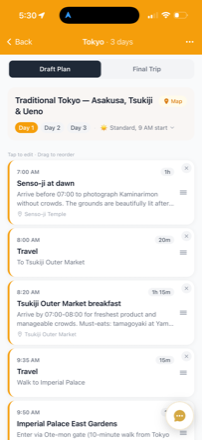
Your Itinerary
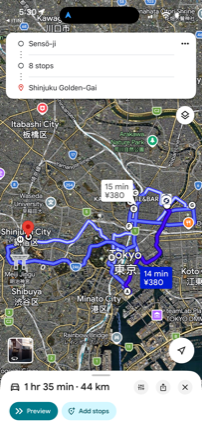
Google Maps
Osaka is Japan's friendliest city, but knowing these essential tips will transform your experience. Say "ookini" instead of arigatou — Osaka's local thank you earns instant warmth. Never tip — it is not Japanese custom and can cause confusion. Remove shoes indoors at temples, ryokan, and many restaurants. Learn basic chopstick etiquette — never stick them upright in rice. Set up an ICOCA card (¥2,000) on arrival for seamless train and shop payments. Try an onsen (hot spring bath) — wash before entering, no swimwear. Carry cash (¥10,000-20,000) — many of Osaka's best food spots are cash-only. Konbini (convenience stores) serve excellent food for ¥120-600. Follow train etiquette — phones on silent, no calls. And carry your trash — there are almost no public bins.
For a deeper look at navigating the city, our Osaka transport guide breaks down the Metro, JR lines, and travel passes in detail. Planning what to eat? The Osaka food guide covers everything from street-stall takoyaki to Michelin-level kaiseki. And if you have not booked yet, our where to stay in Osaka guide helps you pick the right neighborhood for your trip.
Visiting with children? Our Osaka for families guide highlights kid-friendly attractions and practical tips for traveling with little ones. Traveling alone? Check our Osaka solo travel guide for safety advice and the best experiences for independent explorers. Timing your visit around the seasons? Read our cherry blossom season and autumn foliage guides. Coming from Tokyo? Our Tokyo to Osaka page covers every route option. And if you want us to handle the details, try our plan my trip tool to build a personalized Osaka itinerary. Many of these tips also apply if you combine with Kyoto — just 30 minutes away by train and the perfect cultural complement to Osaka's street food energy.
Cultural Tips
Kansai-ben Phrases
Osaka has its own dialect — Kansai-ben (Osaka-ben) — that locals are proud of. "Ookini" (oh-kee-nee) means "thank you" and using it earns instant warmth. "Nandeyanen!" (nan-de-ya-nen) means "what the heck!" and is Osaka's famous comedic catchphrase. "Maido" (my-doe) means "hello/welcome" in shops. "Akan" means "no good." "Honma" means "really/truly." Using even one Kansai phrase shows respect and locals love it. Osaka is Japan's comedy capital, and humor is deeply embedded in daily interactions. Osakans are warmer and more outgoing than their Tokyo counterparts.
Tipping is Not Expected
Never tip in Japan — it is not part of the culture and can actually cause confusion or offense. Restaurant bills are final, taxi meters are definitive, and hotel porters do not expect tips. Some establishments may even chase you down the street to return money left on the table, thinking you forgot it. The price you see is the price you pay (though some restaurants add a small "otoshi" appetizer charge of ¥300-500 per person at izakayas). Exceptional service is simply the Japanese standard — tipping implies the baseline is not good enough.
Shoes Off Indoors
Removing shoes when entering homes, ryokan, some restaurants, temples, and dressing rooms is a fundamental Japanese custom. Look for a genkan (entrance step) and rows of slippers or shoe lockers. If there is a raised floor, shoes come off. Temples and shrines with tatami rooms require shoe removal. Some restaurants (especially traditional ones) have shoe lockers at the entrance. Socks are acceptable — bare feet less so. This is why packing socks without holes is important. Separate toilet slippers are provided in ryokan and some restaurants — do not forget to switch back.
Chopstick Etiquette
Key chopstick rules: never stick chopsticks upright in rice (this resembles funeral incense offerings and is deeply disrespectful). Never pass food chopstick-to-chopstick (this mimics a funeral rite). Do not point with chopsticks. Do not rub disposable chopsticks together (implies they are cheap). Rest chopsticks on the chopstick holder (hashioki) when not eating. Use the blunt end to take from shared plates. It is acceptable to lift bowls (rice, miso soup) to your mouth. Slurping noodles is not only acceptable but encouraged — it shows enjoyment.
IC Card Setup
Buy an ICOCA card at any JR station on arrival (¥2,000: ¥500 refundable deposit + ¥1,500 credit). This rechargeable card works on all trains, metros, and buses across the Kansai region, plus convenience stores, vending machines, and many shops. Tap in and out at ticket gates. Top up at any station machine. The ICOCA eliminates the need to buy individual tickets — simply tap and go. It also works in Tokyo and other Japanese cities. Apple Pay users can add a Suica (equivalent card) to their iPhone. Get your ¥500 deposit refunded when leaving Japan at any JR ticket counter.
Onsen Etiquette
Onsen (hot spring baths) and sento (public bathhouses) are a must-try Japanese experience. Key rules: wash thoroughly at the shower stations before entering the bath (this is mandatory, not optional). Do not put your towel in the water — fold it on your head. Onsen are nude-only — no swimwear. Tattoos are traditionally prohibited in many onsen (though attitudes are softening). Soak quietly and respectfully. Separate baths for men and women. Many capsule hotels in Osaka have excellent onsen facilities. Some private onsen (kashikiri) are available for couples.
Practical Tips
Cash is King
Despite Japan's technological reputation, cash remains essential in Osaka. Many street food stalls, small izakayas, ramen shops, temples, and local businesses are cash-only. Carry ¥10,000-20,000 at all times. 7-Bank ATMs (found in every 7-Eleven convenience store) reliably accept foreign Visa, Mastercard, and most international cards. Post office ATMs also work well. Regular bank ATMs often reject foreign cards. Withdraw cash on arrival at Kansai Airport. Japan uses ¥1, ¥5, ¥10, ¥50, ¥100, and ¥500 coins — a coin purse is genuinely useful.
Konbini (Convenience Stores)
Japanese convenience stores — 7-Eleven, Lawson, FamilyMart — are a revelation. They serve excellent food: onigiri (¥120-180), bento boxes (¥400-600), fresh sandwiches (¥200-300), pastries, salads, and hot snacks. They also offer ATMs (7-Bank), ticket purchases, bill payments, luggage shipping (takkyubin), photocopying, free Wi-Fi, and clean restrooms. Many are open 24/7. Konbini are not gas station food — the quality rivals casual restaurants. They are an essential part of Japanese daily life and a budget traveler's best friend. The egg sandwiches are legendary.
Train Etiquette
Japanese train etiquette is important. Keep your phone on silent mode (manner mode). Do not talk on the phone on trains. Speak quietly with travel companions. Do not eat on local trains (Shinkansen and limited express are exceptions). Give priority seats to elderly, pregnant, disabled, and injured passengers. Stand in orderly lines on the platform — markings show where doors will open. Let passengers exit before boarding. Keep backpacks in front of you during rush hour. The Osaka Metro is quieter and more orderly than you might expect.
Trash Disposal
Japan has very few public trash bins, yet the streets are spotlessly clean. The expectation is that you carry your trash until you find a bin — usually at convenience stores, train stations, or vending machine areas. Separate recyclables: burnable garbage, plastic bottles, cans, and PET bottles each have different bins. At konbini, bins are by the entrance. At home or ryokan, follow the sorting instructions carefully. Littering is culturally unacceptable. Many travelers carry a small plastic bag for trash during the day. It feels strange at first but becomes natural quickly.
Wi-Fi & SIM Cards
Options for staying connected: Tourist SIM cards are available at Kansai Airport vending machines (¥1,500-3,000 for 7-30 days with data). eSIMs (Airalo, Ubigi, Holafly) can be set up before landing — most convenient option. Pocket Wi-Fi rental (¥500-1,000/day) from airport counters provides a portable hotspot. Free Wi-Fi is available at most hotels, konbini (7-Eleven, Lawson, FamilyMart), train stations, and tourist attractions, though quality varies. Download Google Maps offline and Google Translate Japanese before arrival.
Emergency Numbers
Police: 110. Fire and ambulance: 119. Both numbers work from any phone. Japan Tourism Helpline: 050-3816-2787 (24/7, multilingual support for tourists). Police boxes (koban) are found at major intersections — officers are helpful even with language barriers. Japanese hospitals are excellent but many require cash payment upfront. Travel insurance is essential. Your embassy or consulate can help with serious emergencies. Japan is extremely safe, but knowing these numbers provides peace of mind. Carry your passport or a copy at all times (legally required for foreign visitors).