
Dotonbori Guide
Osaka's neon-lit entertainment hub — legendary street food, the iconic Glico Man sign, canal cruises, and Japan's most dazzling urban spectacle
Powered by ITINE
Get this guide as a tappable itinerary
Day-by-day plan, audio tours, and one-tap Google Maps — completely free.
Destinations
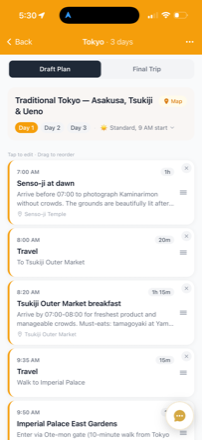
Your Itinerary
Google Maps
Dotonbori is Osaka's most famous district and the pulsing heart of the city's legendary kuidaore (eat until you drop) culture. This neon-lit entertainment hub along the Dotonbori canal has been the center of Osaka's cultural life since merchant Yasui Doton invested his fortune in developing the canal in 1612, transforming the area into a thriving theater and entertainment district.
Today, Dotonbori is an overwhelming sensory experience — towering three-dimensional signs depicting giant crabs, octopuses, and dragons compete for attention alongside the iconic Glico Running Man neon sign that has overlooked the canal since 1935. The narrow streets are packed with over 100 street food stalls and restaurants serving Osaka's signature dishes: crispy takoyaki (octopus balls), sizzling okonomiyaki (savory pancakes), golden kushikatsu (deep-fried skewers), and much more. With over 90 million visitors annually, Dotonbori is the most visited entertainment district in western Japan and an absolute must-visit for anyone coming to Osaka. The atmosphere reaches its peak after dark when the neon signs illuminate the canal, creating the dazzling urban spectacle that has become the defining image of Osaka around the world.
1612
Established
90M+
Annual Visitors
100+
Street Food Stalls
2.7km
Canal Length
What to See
Glico Man Sign
The Glico Running Man is the most iconic image of Osaka and one of the most photographed landmarks in all of Japan. This enormous neon sign has overlooked the Dotonbori canal from the Ebisubashi Bridge since 1935, depicting a sprinting athlete with his arms raised in triumph against a vivid blue background. The current sixth-generation sign, installed in 2014, features 140,000 LED lights and incorporates famous Osaka landmarks in its background design. The sign is modeled after a runner crossing the finish line — a fitting symbol for a city that celebrates energy, ambition, and the joy of living. The best vantage point is from the center of Ebisubashi Bridge, where you can capture the sign's reflection in the canal below. The sign is illuminated from dusk until midnight and is most spectacular in the evening when the surrounding neon signs of Dotonbori create a dazzling backdrop. During special occasions, the sign displays limited-edition designs — Osaka Expo 2025 versions and sports celebration editions have become collector's photo opportunities.
Canal Cruise
The Tombori River Cruise offers a unique perspective of Dotonbori from the water, gliding along the 2.7-kilometer canal that has been the lifeblood of this district since 1612. The 20-minute cruise departs from the Tazaemon Bridge dock and takes you under the famous bridges of Dotonbori while a guide (in Japanese with English pamphlet) shares stories about the district's history, from its origins as a theater district to its transformation into the neon-lit food capital it is today. From the boat, you see the towering signs — the giant mechanical crab of Kani Doraku, the running Glico Man, and dozens of illuminated food replicas — from a completely different angle than street level. The cruise is especially magical after dark when the neon signs reflect off the water surface, creating a shimmering corridor of light. Boats depart every 30 minutes from 1:00 PM to 9:00 PM (extended hours on weekends and holidays). Tickets are ¥1,000 adults, ¥500 children, and can be purchased at the dock or are included free with the Osaka Amazing Pass.
Kani Doraku Crab
The giant mechanical snow crab above the entrance to Kani Doraku restaurant is one of the most recognizable signs in all of Dotonbori and has been a beloved landmark since the restaurant opened in 1960. The three-dimensional, articulated crab — with its moving legs and claws — is over 6 meters wide and is the original of what has become a nationwide chain, though none of the other locations capture the magic of this flagship Dotonbori original. The restaurant itself specializes in snow crab (zuwaigani) and king crab (tarabagani) prepared in every conceivable style: sashimi, tempura, grilled, hot pot (nabe), and shabu-shabu. Full-course crab dinners range from ¥5,000 to ¥16,000 per person, while the more affordable lunch sets start at ¥3,000. Even if you don't dine at the restaurant, the giant crab sign is an essential photo stop and has appeared in countless films, TV shows, and travel guides about Osaka. Nearby, you'll spot other famous oversized food signs — the fierce dragon of Kinryu Ramen and the gyoza sign at Osaka Ohsho.
Street Food Stalls
Dotonbori's street food stalls are the beating heart of Osaka's kuidaore culture, offering an extraordinary concentration of Japan's most beloved street foods along a single neon-lit boulevard. The district has over 100 street food stalls and restaurants packed into just a few blocks, each specializing in a particular dish perfected over decades. The air is thick with the aroma of sizzling batter, grilling meat, and sweet sauces. Vendors call out to passersby with theatrical enthusiasm — the sales pitch (kuchikomi) is itself a performance and part of the Dotonbori experience. Most stalls have English menus and photo displays making ordering easy. The busiest time is 6:00 PM to 10:00 PM on weekends, when the narrow streets become a flowing river of food lovers. For a less crowded experience, visit weekday afternoons or late at night when many stalls remain open until midnight or later. The best strategy is to eat small portions at many stalls rather than filling up at one — this is how Osakans do it.
Neon Lights
Dotonbori's neon signage is one of the great urban spectacles in the world — a dazzling, overwhelming, gloriously excessive display of light, color, and movement that transforms the district into an open-air gallery of commercial art after dark. The tradition dates back to the 1920s when Dotonbori's theaters and restaurants began competing for attention with increasingly elaborate signs. Today, the result is a sensory overload of three-dimensional signs, animated LED displays, and giant food replicas that stretch for blocks along both sides of the canal. Beyond the famous Glico Man and Kani Doraku crab, look for the enormous octopus above Konamon Museum (a takoyaki museum and restaurant), the running dragon of Kinryu Ramen, and the neon pufferfish lanterns that mark fugu restaurants. The neon is most impressive viewed from Ebisubashi Bridge and the Tombori River Walk (a pedestrian promenade along the canal's south bank). The lights come alive from dusk and remain illuminated until the early hours of the morning.
Tombori River Walk
The Tombori River Walk is a pedestrian promenade that runs along the south bank of the Dotonbori canal, providing a more relaxed vantage point to enjoy the district's neon spectacle away from the crowded streets above. The walkway was developed as part of a major urban renewal project and offers benches, atmospheric lighting, and direct water-level views of the illuminated signs reflecting off the canal surface. Street performers, musicians, and artists frequently set up along the promenade, adding to the vibrant atmosphere. The walk stretches from Daikoku Bridge in the east to Fukuzawa Bridge in the west, covering the most photogenic section of the canal. Several restaurants and cafes have terraces overlooking the walkway, making it an excellent spot for a drink while watching the evening unfold. The River Walk connects to the broader Minami (Namba) entertainment district, where you can continue exploring Ura-Namba's backstreet bars or the Hozenji Yokocho alley with its moss-covered stone statue and atmospheric lantern-lit restaurants.
Street Food Guide
Takoyaki
¥500-700 (6-8 pieces)Crispy-shelled octopus balls — Osaka's signature street food. Golden spheres of wheat batter filled with tender diced octopus, tempura scraps, and pickled ginger, cooked in special molded iron pans and topped with tangy takoyaki sauce, creamy mayo, bonito flakes, and green aonori seaweed.
Where to try: Wanaka, Kukuru, Takoyaki Juhachiban
Okonomiyaki
¥800-1,200Osaka-style savory pancakes — a thick, satisfying batter of flour, eggs, and shredded cabbage mixed with your choice of pork, seafood, or cheese, griddled on a sizzling teppan (iron plate), and topped with sweet-savory okonomiyaki sauce, mayo, bonito flakes, and aonori.
Where to try: Mizuno, Fukutaro, Kiji
Kushikatsu
¥100-200 per skewerDeep-fried skewers — breaded and golden-fried sticks of meat, seafood, and vegetables served with a communal dipping sauce. The sacred rule: no double-dipping. Popular varieties include pork, shrimp, lotus root, asparagus, quail egg, and mochi.
Where to try: Daruma, Yaekatsu, Kushikatsu Tanaka
Gyoza
¥300-500 (6 pieces)Pan-fried dumplings with a crispy bottom and juicy pork and vegetable filling, served with soy sauce, rice vinegar, and chili oil. Osaka gyoza tend to be smaller and crispier than their Chinese counterparts, meant to be eaten in large quantities.
Where to try: Osaka Ohsho, Gyoza no Ohsho, Horai
Yakitori
¥100-200 per skewerCharcoal-grilled chicken skewers seasoned with either tare (sweet soy glaze) or shio (salt). Popular cuts include momo (thigh), negima (thigh with leek), tsukune (meatball), kawa (skin), and the adventurous sunagimo (gizzard) and hatsu (heart).
Where to try: Torikizoku, street stalls throughout Dotonbori
Taiyaki
¥200-350Fish-shaped waffle cakes filled with sweet red bean paste (anko), custard cream, chocolate, or seasonal flavors like sweet potato and matcha. The crispy exterior and warm, gooey filling make this the perfect dessert to eat while walking through Dotonbori.
Where to try: Naruto Taiyaki Honpo, various stalls
Pro Tips
Eat Small, Eat Often
The golden rule of Dotonbori is to eat small portions at many different stalls rather than filling up at one restaurant. Order 4-6 takoyaki instead of 8, share an okonomiyaki between two people, and try just 3-4 kushikatsu skewers at each spot. This way you can sample 6-8 different foods and truly experience the breadth of Osaka's street food scene. Arrive hungry — skip lunch if you are doing an evening food crawl, and pace yourself. The stalls stay open until midnight or later, so there is no rush.
Visit the Back Streets
While the main Dotonbori strip is the essential experience, the real culinary gems are often found in the side streets and alleys. Hozenji Yokocho, a narrow atmospheric alley just south of the main strip, is home to the moss-covered Hozenji temple and intimate lantern-lit restaurants. Ura-Namba (the backstreets behind Namba station) is where locals go for standing bars (tachinomi), natural wine, and craft cocktails in tiny, character-filled establishments. These areas offer a completely different — and arguably more authentic — Osaka dining experience.
Photograph the Canal at Night
The best photographs of Dotonbori are taken from Ebisubashi Bridge after dark, when the neon signs are fully illuminated and their reflections shimmer in the canal water below. For the classic Glico Man shot, stand at the center of the bridge facing east. The Tombori River Walk (south bank of the canal) offers excellent eye-level perspectives of the reflected neon. For a wider panoramic view, head to the Tazaemon Bridge or the elevated walkway at Don Quijote's Ferris wheel. Evening golden hour (just before full darkness) produces the most balanced exposure between neon and sky.
No Double-Dipping
When eating kushikatsu (deep-fried skewers), the most important rule is: “no double-dipping” (nido-zuke kinshi). The communal sauce pot at your table is shared by all diners, so you dip your skewer only once before eating. If you want more sauce, use the cabbage leaves provided to scoop sauce onto your skewer. This rule is taken very seriously in Osaka — signs in both Japanese and English remind customers in every kushikatsu restaurant. It's a small cultural detail that locals appreciate visitors respecting.