
Tenjin Matsuri Guide
One of Japan's three greatest festivals — 1,000+ years of fire, water, and thunder on the streets and rivers of Osaka every July 24-25
Powered by ITINE
Get this guide as a tappable itinerary
Day-by-day plan, audio tours, and one-tap Google Maps — completely free.
Destinations
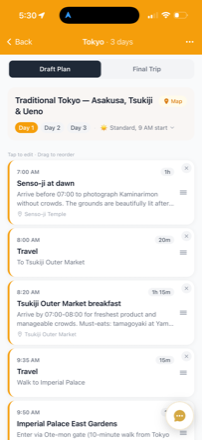
Your Itinerary
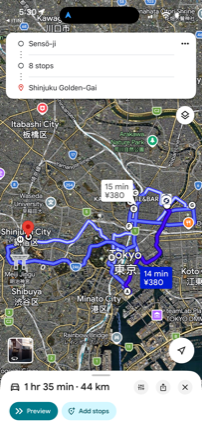
Google Maps
Tenjin Matsuri is one of Japan's three greatest festivals (alongside Kyoto's Gion Matsuri and Tokyo's Kanda Matsuri) and the single most spectacular event on Osaka's calendar. Held annually on July 24-25 at Osaka Tenmangu shrine, the festival dates back to 951 AD and is dedicated to Sugawara no Michizane, the deified scholar and patron deity of learning, scholarship, and the arts. Over two days, more than 1 million visitors flood the streets and riverbanks of northern Osaka to witness a land procession of 3,000+ participants in Heian-period costumes, a river procession of 100+ illuminated boats gliding down the Okawa River at dusk, and a fireworks display of 5,000+ shells exploding over the water while the boats pass below. It is a festival of fire and water, ancient ritual and joyful celebration, sacred ceremony and street-food frenzy — and it has been running continuously for over a thousand years.
This guide covers everything you need to plan your Tenjin Matsuri experience: the complete schedule for both days, the best viewing spots for processions and fireworks, how to get there, what to eat, and practical tips for surviving the July heat and million-person crowds. For broader Osaka planning, see our food guide, best time to visit, and where to stay guide.
Festival Schedule
Two days of processions, ceremonies, boats, and fireworks — the complete Tenjin Matsuri timeline.
July 24 — Yomiya (Eve of the Festival)
The festival opens with a solemn Shinto ceremony at Osaka Tenmangu shrine. Priests perform purification rites and offer prayers to Sugawara no Michizane, the deity of learning and scholarship enshrined here. While the early hour means most tourists skip this, witnessing the ritual is a rare glimpse into the spiritual heart of the festival.
The thunderous Moyoshi Daiko procession launches from Osaka Tenmangu and winds through the surrounding streets. Teams of drummers mounted on portable platforms pound massive taiko drums while being carried through the neighborhood, their rhythms echoing off buildings and signaling the start of the festival to the entire city. The energy is electric and the sound reverberates through your chest.
The grounds of Osaka Tenmangu and surrounding streets fill with hundreds of yatai (festival stalls) selling yakisoba, takoyaki, kakigori, and more. Traditional entertainment including noh performances and kagura (sacred Shinto dances) takes place at the shrine. The atmosphere builds throughout the afternoon as locals arrive in yukata (summer kimono) and the streets grow lively.
July 25 — Hon Matsuri (Main Festival)
The spectacular land procession departs Osaka Tenmangu with over 3,000 participants dressed in elaborate Heian-period costumes (794-1185 AD). The procession features mikoshi (portable shrines), ox carts draped in silk, umbrella-shaped parasol floats, shishi-mai (lion dancers), court musicians playing gagaku (ancient court music), children in ceremonial dress, and samurai warriors. The 3-kilometer route winds through the streets of Tenmabashi and Kitahama toward the Okawa River. This is the most photogenic part of the festival.
As the sun sets, the land procession transfers to the water. Over 100 boats, many illuminated with thousands of lanterns and paper lights, set sail on the Okawa River (formerly Dojima River). The sacred mikoshi is placed aboard the lead vessel, followed by boats carrying musicians, dancers, and festival officials. The reflection of the illuminated boats on the dark water creates an unforgettable scene that has been celebrated in Japanese art for centuries. Spectators line both banks of the river, and the atmosphere is electric.
The climax of Tenjin Matsuri: over 5,000 fireworks launched from the banks of the Okawa River, exploding in brilliant colors above the illuminated boat procession below. The combination of fireworks overhead and lantern-lit boats on the water is unique to Tenjin Matsuri and creates a scene of extraordinary beauty. The display lasts approximately one hour, with the grand finale sending rapid-fire bursts of color across the sky. An estimated 1.3 million spectators watch the fireworks across the riverbanks and surrounding areas.
Best Viewing Spots
Where to position yourself for the land procession, river boats, and fireworks.
Temmabashi Area
Land ProcessionThe streets around Temmabashi Station offer the best views of the Rikutogyo land procession as it passes through the neighborhood. Position yourself along the parade route between Osaka Tenmangu and the river. Arrive by 2:00 PM to secure a front-row spot on the sidewalk. The section near Temmabashi Bridge is particularly scenic as the procession turns toward the river.
OAP Tower Riverside
Boat ProcessionThe riverbank near OAP (Osaka Amenity Park) Tower on the east side of the Okawa River provides an elevated perspective on the illuminated boat procession. The wide promenade here offers more space than the western bank, and the view of boats gliding past with the city skyline behind them is superb. Food vendors set up along this stretch.
Sakuranomiya Park
FireworksSakuranomiya Park stretches along the eastern bank of the Okawa River and is the most popular free viewing spot for the Hounou Hanabi fireworks. The park offers unobstructed views upriver toward the fireworks launch point, and the fireworks reflecting on the water add a second layer of spectacle. The trade-off is extreme crowding -- plan to arrive by 5:00 PM at the latest.
Okawa Riverbanks (West Side)
Boats & FireworksThe western bank of the Okawa River between Temmabashi and Sakuranomiya bridges offers combined views of both the boat procession and fireworks. While more crowded than the east bank, the proximity to the boats is closer. Sections near Tenmabashi are less packed than Sakuranomiya Park, making this a good compromise between crowd density and viewing quality.
Paid Boat Seats
Ultimate ExperienceFor the most immersive experience, purchase a seat on one of the paid spectator boats that join the Funatogyo procession on the Okawa River. You will be on the water among the illuminated festival boats, with fireworks exploding directly overhead. Tickets range from 6,000 to 20,000 yen depending on the boat and package (some include food and drink). Tickets sell out months in advance -- booking opens in May/June through the Tenjin Matsuri official website and local travel agencies.
Getting There
Train stations, routes, and crowd management for reaching Tenjin Matsuri.
Osaka Tenmangu Shrine
AccessThe shrine is the heart of the festival and the starting point for all processions. It is a 3-minute walk from Minami-morimachi Station on the Tanimachi Line or Sakaisuji Line. Alternatively, take the JR Tozai Line to Osakatenmangū Station (direct exit to the shrine grounds). The Tanimachi Line connection from Namba or Umeda is the most convenient for most visitors.
Fireworks & River Procession
AccessFor the river procession and fireworks, the closest stations are Temmabashi Station (Keihan Line / Tanimachi Line) and Sakuranomiya Station (JR Loop Line). Sakuranomiya Station provides direct access to Sakuranomiya Park on the east bank. Temmabashi Station serves the west bank and Temmabashi bridge area. Both stations experience severe congestion during the festival.
Crowd Warning & Timing
AccessTenjin Matsuri draws over 1 million visitors across two days, with the vast majority concentrated on July 25 evening for the boat procession and fireworks. Expect extreme congestion at all nearby stations from 4:00 PM onward, with near-gridlock conditions after the fireworks end (8:30-10:00 PM). Arrive at least 2 hours before the event you want to see. Walking between stations is often faster than waiting for packed trains. Consider walking to Umeda or Kitahama stations after the fireworks to avoid the worst of the crush.
Food & Festival Stalls
Hundreds of yatai (street stalls) line the streets around Osaka Tenmangu and along the river — the festival food experience is half the fun.
Yakisoba
Stir-fried noodles with pork, cabbage, and tangy sauce are a festival staple. Served in a paper tray and eaten with chopsticks while walking -- the smoky aroma from the giant griddles is irresistible.
Takoyaki
Osaka's signature octopus balls are even more ubiquitous at Tenjin Matsuri than on a normal day in Dotonbori. Festival-stall takoyaki tends to be slightly rougher than shop versions, but the atmosphere makes up for it.
Kakigori (Shaved Ice)
Essential in the July heat. Mountains of fluffy shaved ice drenched in syrup -- strawberry, melon, Blue Hawaii, matcha, and condensed milk are the classic flavors. Some stalls offer premium versions with real fruit toppings.
Ikayaki (Grilled Squid)
Whole squid pressed flat on a grill and basted with sweet soy sauce. The charred, chewy texture and umami-rich flavor make ikayaki one of the most satisfying festival foods. Served on a stick for easy walking.
Ramune Soda
The iconic Japanese marble soda in a glass Codd-neck bottle. Push the marble down to open it, and the fizzy, lightly sweet soda is the quintessential Japanese summer refreshment. Available in original, strawberry, melon, and seasonal flavors.
Wataame (Cotton Candy) & Kingyo-sukui (Goldfish Scooping)
Giant bags of pastel cotton candy in character-themed packaging are carried by children everywhere. Goldfish scooping (kingyo-sukui) is the classic festival game -- use a fragile paper scoop to catch a goldfish and take it home in a plastic bag.
Tips for Tenjin Matsuri
Practical advice to make the most of your Tenjin Matsuri experience.
Wear a Yukata
Tenjin Matsuri is the premier yukata occasion in Osaka. Wearing a yukata (lightweight summer kimono) is not just acceptable -- it is the norm and adds enormously to the experience. Yukata rental shops near Osaka Tenmangu and in Tenmabashi area offer full packages (kimono, obi belt, geta sandals, and dressing assistance) for 3,000-6,000 yen. Reserve in advance during festival season as shops fill up fast.
Beat the Heat
July in Osaka is brutally hot and humid -- temperatures regularly exceed 35C (95F) with suffocating humidity. Bring a folding fan (sensu) or portable electric fan, a small towel (tenugui) to wipe sweat, sunscreen, and at least one liter of water. Rehydrate constantly. The combination of summer heat and dense crowds makes heat exhaustion a real risk. Cooling spray and stick-on cooling patches are sold at convenience stores.
No Drone Photography
Drone photography and videography are strictly prohibited during Tenjin Matsuri. The ban is enforced by police and festival security across the entire festival zone, including the riverbanks. Penalties can include confiscation and fines. Use a camera or smartphone -- the fireworks and boat procession photograph beautifully from ground level.
Bring Trash Bags
Public trash bins are virtually nonexistent in Japan, and festival areas are no exception. Bring a small plastic bag to carry your trash -- food wrappers, empty bottles, and chopsticks accumulate quickly during a festival crawl. Some stalls have small collection points, but do not count on finding them when you need them.
Book Accommodation Early
Osaka hotels fill up fast for Tenjin Matsuri, especially properties near the festival area (Tenmabashi, Kitahama, Sakuranomiya). Book your accommodation at least 2-3 months in advance. Hotels in Umeda, Namba, and Shinsaibashi are a short train ride away and tend to have better availability. Capsule hotels and hostels also fill up -- book early regardless of budget.
Stay Hydrated & Plan Your Exit
Buy drinks before you enter the densest festival areas -- vending machines and convenience stores near the venue run out of popular drinks by evening. After the fireworks end at 8:30 PM, over a million people attempt to leave simultaneously. Have a clear exit plan: walk away from the river toward less crowded stations (Ogimachi, Tanimachi-yonchome, or even Umeda) rather than fighting the crowd at Sakuranomiya or Temmabashi.
Planning Your Osaka Trip?
Combine Tenjin Matsuri with Osaka's best food, neighborhoods, and attractions for the ultimate summer visit.